Selecting a residential roof replacement involves evaluating long-term life-cycle costs, structural load-bearing limits, and regional weather resilience. While traditional asphalt shingles remain a common fallback due to low initial material costs, they suffer from rapid thermal degradation, wind uplift vulnerabilities, and frequent maintenance cycles. Modern engineered metal roofing has emerged as the premier choice for property owners seeking permanent structural protection, high energy efficiency, and superior architectural value.
Transitioning to a metal roof requires looking beyond basic aesthetic preferences. Understanding panel profiles, metal gauges, mechanical fastening systems, and protective polymer coatings ensures your installation provides decades of maintenance-free performance.
The Metallurgy and Chemistry of Modern Roof Panels
Not all metal roofs are constructed equally. The base material and factory coatings determine how well the panel resists atmospheric oxidation, thermal expansion, and mechanical impact.
Architectural Steel (Galvalume vs. Galvanized)
- Galvalume Steel: Featuring a hot-dip coating composed of approximately 55% aluminum, 43.4% zinc, and 1.6% silicon, Galvalume provides exceptional barrier corrosion resistance. The aluminum component forms a protective oxide layer, while the zinc offers sacrificial galvanic protection along cut edges.
- Galvanized Steel: Coated entirely with zinc (typically G-90 grade for residential applications), galvanized steel provides solid protection but lacks the long-term barrier durability of Galvalume in high-moisture or salt-air microclimates.
Aluminum Substrates
Aluminum panels are immune to rust, making them the gold standard for coastal environments where airborne salinity rapidly degrades steel. Aluminum is lightweight, easy to form, and highly reflective, though it possesses a higher coefficient of thermal expansion compared to steel, requiring precise clip alignment during installation.
High-Performance Paint Systems (PVDF / Kynar 500®)
The protective coating applied over the metallic substrate dictates color retention and chalking resistance. Premium systems utilize Polyvinylidene Fluoride (PVDF) resin coatings (commonly known as Kynar 500® or Hylar 5000®). PVDF coatings resist solar ultraviolet degradation, holding their original color depth and luster significantly longer than lower-tier silicone-modified polyester (SMP) paints.
To understand the foundational industrial chemistry behind protective metallic coatings, review the technical overview on Hot-dip galvanization at Wikipedia.
Standing Seam vs. Exposed Fastener Profiles
The mechanical design of the panel profile dictates both water shedding capabilities and long-term structural integrity.
Standing Seam Systems (Concealed Fasteners)
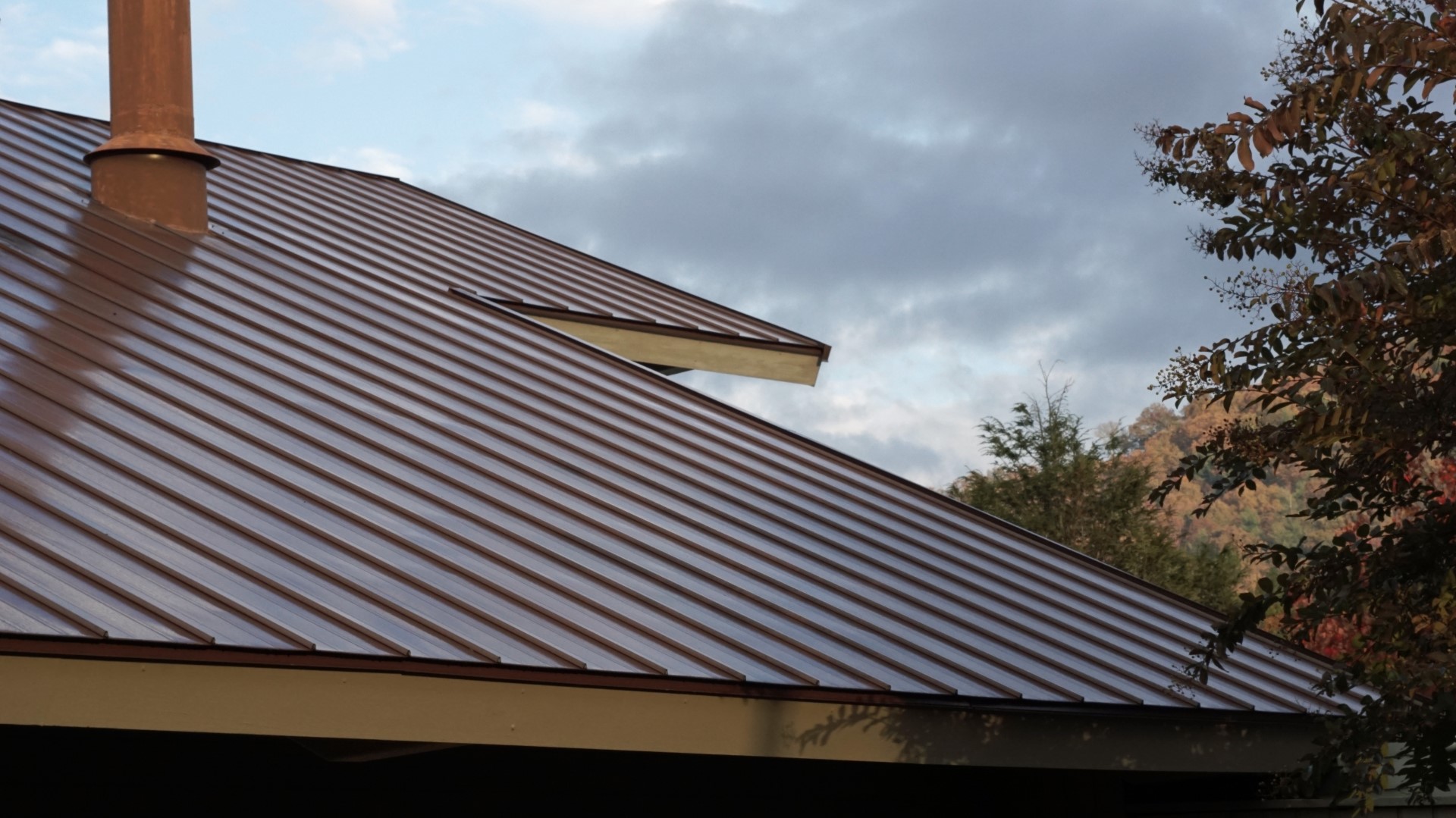
Standing seam roofs feature raised vertical legs containing concealed clips anchored directly to the roof deck. The panels snap together or are mechanically seamed over the clips.
- Zero Exposed Penetrations: Because screws do not pierce the exterior face of the panel, water cannot find a path through fastener holes.
- Thermal Movement Thermal Clearance: Metal expands and contracts with daily temperature swings. Standing seam clips allow the panels to slide float smoothly without stressing the fasteners or oil-canning the metal.
- Maximum Lifespan: A properly installed standing seam system routinely achieves a service life exceeding 50 years with minimal maintenance.
Exposed Fastener Panels (Corrugated & R-Panel)
Exposed fastener systems utilize overlapping metal sheets screwed directly through the face of the panel into the wooden roof deck.
- Lower Upfront Cost: Panel production and installation labor costs are lower than standing seam.
- Maintenance Obligations: Rubber or neoprene washers on exposed screws eventually dry out, crack, and back out due to panel thermal movement. They require routine inspection and replacement every 10 to 15 years to prevent structural roof leaks.
For expert technical guidance on choosing the ideal panel configuration for your property, consult the structural specialists at Hale Roofing and Construction.
Thermal Efficiency, Radiant Heat Transfer, and Attic Dynamics
A common misconception is that a metal roof absorbs heat and warms the home interior. In reality, modern metal systems are vastly cooler than traditional asphalt shingles.
Cool Roof Photometric Reflectance
Asphalt shingles absorb up to 90% of solar thermal radiation, transferring that heat directly into the attic structure and forcing air conditioning units to work overtime. Factory PVDF coatings incorporate cool roof pigments that reflect up to 70% of solar radiant energy back into the atmosphere.
Emissivity and Thermal Discharge
Reflectance measures how much solar light is bounced away, while emissivity measures how quickly a material releases absorbed heat. Metal possesses high thermal emissivity, rapidly shedding heat as soon as the sun drops or shade passes over, preventing overnight attic heat soak.
Above-Sheathing Ventilation (ASV)
Installing metal panels over a raised batten system creates a continuous air gap between the roof deck and the metal panels. This Above-Sheathing Ventilation layer acts as a thermal break, allowing convective air currents to flush heat upward through the ridge vent before it can penetrate the attic space, cutting cooling costs significantly.
Structural Engineering: Hail, Wind, and Fire Resistance
Investing in a high-grade roof assembly protects the home against catastrophic severe weather events, offering unmatched structural ratings.
- Class 4 Impact Resistance (UL 2218): Metal panels are rated to withstand large hail impacts without cracking or puncturing. Unlike asphalt shingles, which lose protective mineral granules during hail strikes, metal maintains its structural envelope.
- Extreme Wind Uplift Performance (UL 580): Mechanically seamed standing seam panels easily pass high-velocity hurricane zone testing, withstanding continuous wind uplift pressures exceeding 140 mph.
- Class A Fire Rating: As a non-combustible material, metal offers maximum resistance against airborne windblown embers from wildfires or adjacent structural fires.
Essential Underlayment and Flashing Details
A metal roof relies on its secondary water barrier and precision perimeter flashing to guarantee 100% weather tightness.
High-Temperature Synthetic & Peeland-Stick Underlayment
Metal panels reach higher surface temperatures than asphalt shingles. Standard organic felt paper breaks down quickly under metal. Installations require high-temperature synthetic underlayments or self-adhering modified bitumen membranes rated to withstand continuous temperatures up to 250°F.
Precision Flashing and Valleys
Water intrusion on a metal roof rarely occurs in the center of a panel; it occurs at wall intersections, chimneys, sidewalls, and valleys. Custom-folded, heavy-gauge flashings—such as Z-closures, headwall flashings, and hemmed valley pans—must be installed using high-grade butyl sealant tape rather than temporary exposed caulking.
Frequently Asked Questions
Is a metal roof noisy during heavy rainfall?
No. When installed over solid plywood decking and a high-temperature underlayment, attic insulation dampens sound vibration completely. Indoor noise levels during rainstorms are virtually indistinguishable from asphalt shingle roofs.
Will a metal roof increase the risk of a lightning strike?
No. Lightning strikes the highest grounded point in a geographical area regardless of material. Because metal is a non-combustible conductor, if lightning ever were to strike the structure, the metal panel safely disperses the electrical energy while preventing ignition.
Can solar panels be installed on a standing seam metal roof?
Yes. Standing seam roofs offer the easiest solar installation process available. Non-penetrating seam clamps grip the vertical legs directly, allowing solar mounting rails to attach securely without drilling a single hole through the roof deck.
Practical Maintenance Habits for Metal Roofs
While metal requires far less maintenance than shingle or tile systems, simple routine upkeep preserves its pristine appearance:
- Clear Debris from Valleys: Remove accumulated leaves, pine needles, and twigs from valley pans to ensure unhindered water drainage.
- Trim Overhanging Branches: Cut back tree limbs that rub directly against panels to prevent mechanical abrasion of the protective PVDF paint layer.
- Inspect Flashings Annually: Check pipe boots, chimney flashings, and valley sealant strips once a year to confirm seals remain intact.
Elevate Your Home with Hale Roofing and Construction
Upgrading to a structural metal roof is a permanent investment in your property’s structural safety, energy efficiency, and curb appeal. Partnering with experienced, precision-focused installation professionals guarantees that every seam, clip, and flashing detail is executed to strict engineering standards.
Ready to secure your home with an engineered roofing system built to last a lifetime? Connect with the technical specialists at Hale Roofing and Construction today to schedule your comprehensive roof evaluation and custom installation quote!